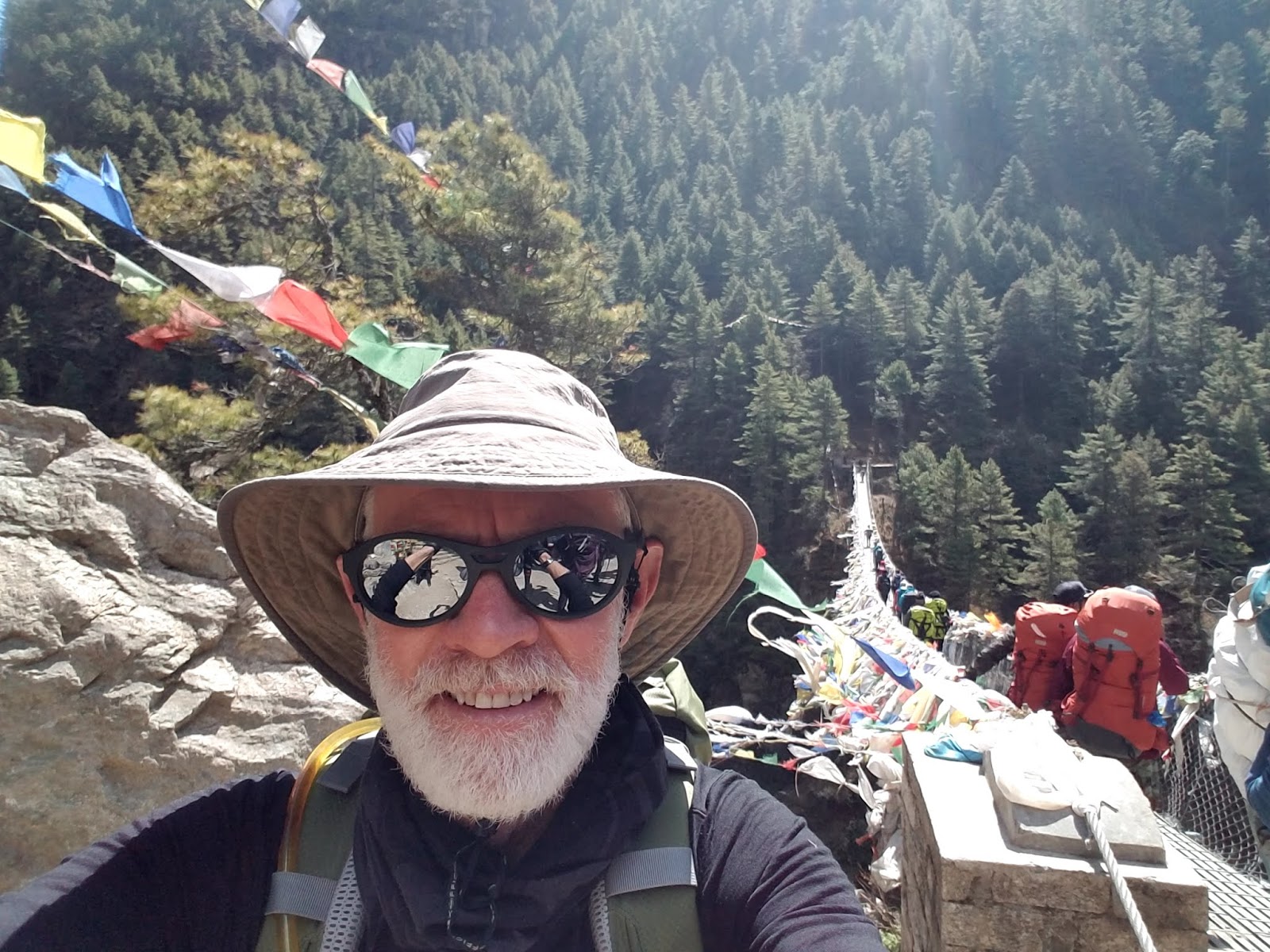
Norway is first and foremost a place of unforgettable natural beauty (and it is the country of my paternal great-grandparents). On this adventure, we chose to go to the fjords, which I think is Norway's greatest claim to scenic beauty. And we chose to go during the Midnight Sun--the summer solstice--when the sun never sets!
But first we must travel across "the pond". We fly non-stop from Denver to Heathrow Airport in London. We will board the ship in a few days in Southampton, but first we will spend a few days in the town of Bath, just a bus ride away.
 |
| We are bus people! |


Upon arriving in Bath, we had just a short walk to our hotel for the next 3 nights. Located in the heart of Bath, The Henry Guest House is in one of the city's real historic buildings (circa 1726).


Bath's fame began with the appeal of its healing hot springs long before the Romans came to town. When the Romans arrived in the first century, they named the town built around the warm waters, Aquae Sulis after a goddess. It was referred to as the city "to take a bath", so it finally became known simply as Bath.
We headed over to the Roman baths for the 9:00 opening. Armed with a very good audio guide, we wandered through the Roman and Medieval history exhibits of the baths.

The Romans loved washing and bathing and instead of it being done in private, they built magnificent public bath houses in towns across their empire.


The terrace above the Great Bath is lined with statues of ancient Romans.

The museum has exhibits that explain the dual purpose of the buildings: a bath complex for relaxation and for healing and a temple dedicated to the goddess Sulis Minerva, who was believed to be responsible for the hot water springs. The artifacts displayed from the Roman period were objects thrown into the springs as offerings to the goddess.
 |
| Sulis Minerva in bronze |
 |
| Coins found in the baths |
 |
| Fragments of the temple |


A very well-done museum! But after about 90 minutes in there, it became very crowded so we declared it time to move on.
But before leaving, Terry was brave and decided to taste the spring water. It is supposedly 10,000 years old, pumped up from nearly 100 yards deep and contains 43 minerals. It was AWFUL!


Leaving the Roman Bath museum, we joined the Mayor's Corp of Honorary Guides free walking tour. This 2-hour tour led by volunteers took us on a guided walk through the streets of Bath telling us stories about the Georgian life of long ago.
 |
| Our walking tour guide, John, was excellent! |

The current building is the last great medieval church of England and was built around 1500. John pointed out the carvings on the facade.
There are angels going down the ladder.

And the king at the time (Henry VIII?) has his name in pictures on the left front of the abbey.

We learned about the window tax. It was a property tax introduced in 1696 based on the number of windows in a house. The more windows one has, the richer one is presumed to be. To avoid the tax some houses from the 18th and 19th century can be seen to have bricked-up window-spaces.

Some houses have this metal emblem near the front door. This was a fire insurance mark.
For most of the 18th century, each insurance company maintained its own fire brigade, which extinguished fires only in those buildings insured by the company. By the 19th century that policy changed as fires in uninsured buildings spread rapidly, so it was best to put them out, insurance or not.

And here we walked on the dirt path featured in one of Jane Austen's books, Persuasion, I think. Jane Austen lived in Bath from 1801 to 1806. Our guide said she didn't like living in Bath...it was too much a social scene, which she disliked. Now I'm going to have to read that book!

The Royal Crescent is a row of 30 terraced houses laid out in a sweeping crescent. It was built between 1767 and 1774 and is one of the greatest examples of Georgian architecture to be found in the United Kingdom.


A weir has been on the maps for Bath since 1603. It was built to control flooding in the town.
This weir was completely rebuilt in the early 1970s and given a more effective and horseshoe-shaped design. The birds love it!

After the walking tour, it is time for lunch. With all we have seen in the last few hours, we are tired! To regain our energy, we search out the highly recommended Sally Lund's Eating House.

It is the oldest house in Bath (circa 1482), and the home of Sally Lund in 1680. She evidently made great buns...
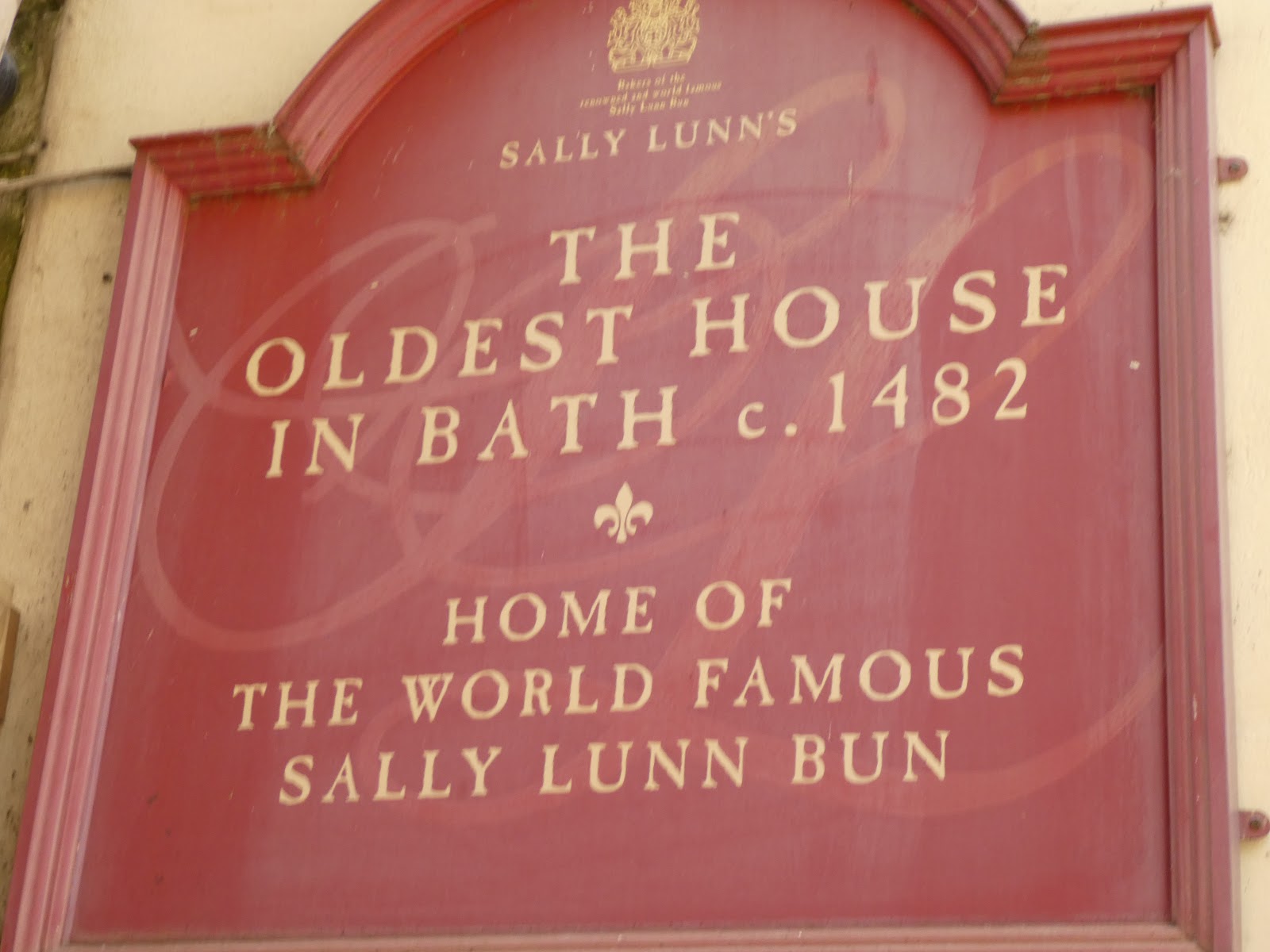

and that is what we had. Yum!
Re-energized after our Sally Lund bun, we set out to see the interior of the Abbey and to climb to the top of the tower.
 |
| Internet photo of the side of the Abbey |
There are stained-glass windows on all sides of the Abbey. The panels tell the story of Jesus in 56 scenes and stories from the first five books of the Bible.

There is a fan-vaulted ceiling created in the 1500s by the king's master mason.


And the floor is made up of 891 flat grave stones called ledgerstones from 1625 - 1845. No other floor in the UK has as many stones.

Work was still going on to repair the unique floor.

After a few minutes of admiring the interior, it was time for our guided tour to the top of the tower.
We climbed 212 steps to the rooftop of the Abbey.

We walked on platforms above the vaulted ceiling....
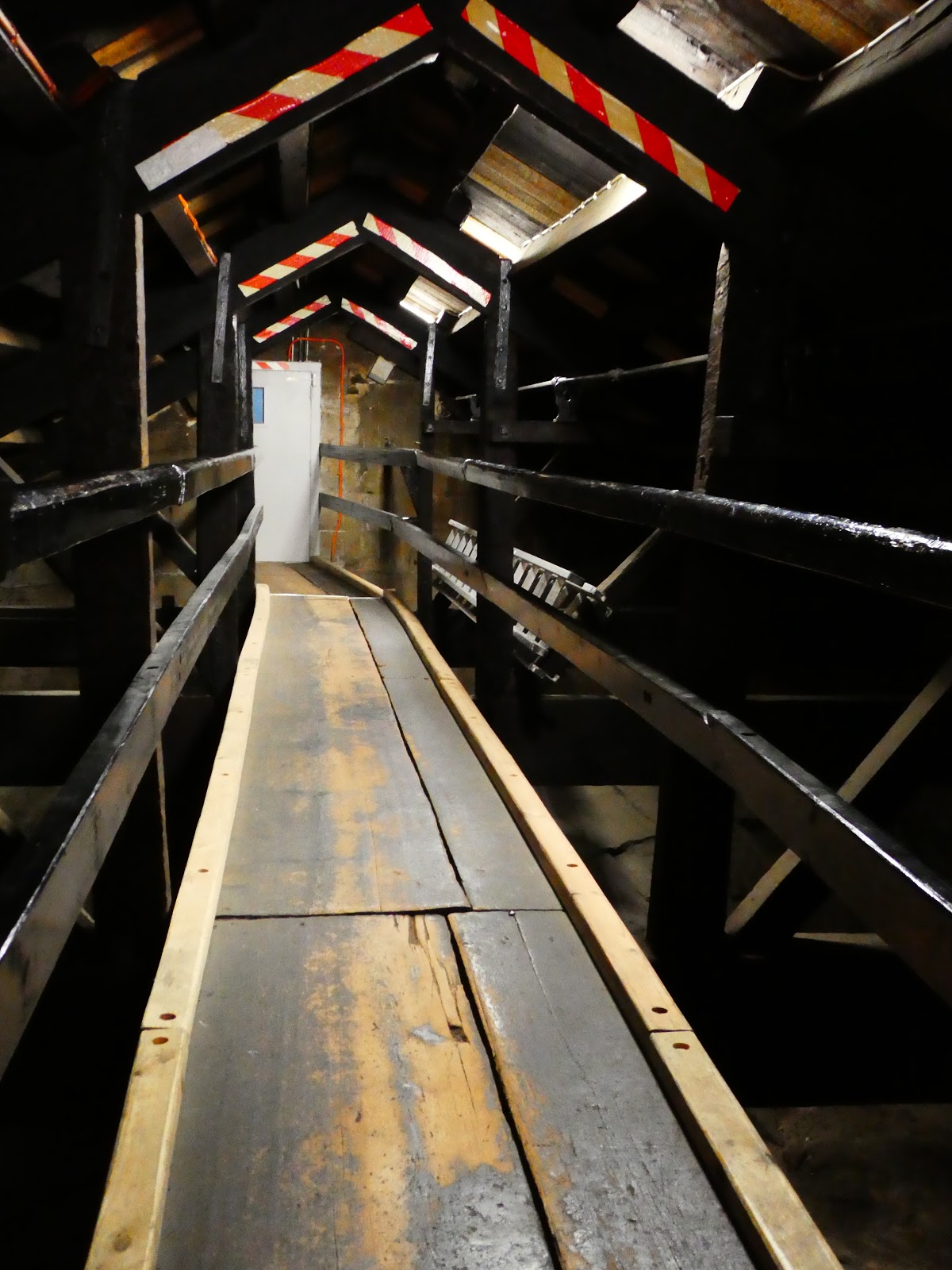
stood behind the huge clock face...


And then saw and heard one of the bells...it is huge!

A few more steps and we pop out on top of the roof...

with some magnificent views of the city of Bath.

And with that, we decided to end the day with a nice dinner and a stroll along the Avon River.

What a day we had...lots of history and beautiful sites. We are exhausted but happy to have learned so much about this beautiful city.

Tomorrow will be a more relaxing day. We are taking a day tour to the Cotswolds, visiting picturesque little villages and then meeting some special friends for dinner.
To continue following along, scroll down past the comment section and click on "Newer Post"